The Art of the 'Vinous Nebula': Deconstructing the Cosmic Influences on Terroir in 2026
In 2026, viticulture expands its understanding of terroir, venturing into the fascinating realm of 'cosmic terroir wine'. This concept explores how celestial forces, beyond soil and climate, profoundly influence a wine's character and development. Discover the intriguing connections between the cosmos and your glass.


Unveiling the Vinous Nebula: Deconstructing the Cosmic Terroir Wine in 2026
In the evolving world of viticulture, the concept of terroir has always been foundational, linking a wine's character directly to its place of origin. But what if "place" extends beyond soil composition and microclimate to include forces far grander, forces emanating from the cosmos itself? This is the fascinating realm of cosmic terroir wine, an area of exploration gaining traction as we move through 2026. This article delves into how celestial bodies and their energies might subtly, yet significantly, influence the vine and, by extension, the wine in your glass. For further investigation into how unique environments shape grapes, explore The Art of the Vinous Alpenglow: Crafting High-Altitude Wines in 2026's Extreme Terroirs.
The Foundations of Cosmic Terroir Wine: Beyond Earthly Boundaries
Traditionally, terroir encompasses elements like soil, climate, topography, and the human touch. These factors are undeniably critical, shaping everything from grape varietal selection to harvest timing. However, the idea of cosmic terroir wine expands this definition, suggesting that lunar cycles, planetary alignments, and even solar activity could play a role in the vine's growth, sap flow, and fruit development.
While some might view these concepts as mystical, many biodynamic practitioners have embraced such principles for decades. In 2026, with advanced sensing technologies and more precise data analysis, researchers are finding new ways to investigate these subtle influences, moving them from the realm of anecdote to potential empirical observation. This rigorous approach mirrors the scientific deconstruction of other sensory elements, such as those discussed in The Art of the 'Vinous Symphony': Deconstructing How Music and Sound Influence Wine Perception in 2026.
Lunar Rhythms and Vine Physiology
- Sap Flow Dynamics: It is hypothesized that the moon's gravitational pull, similar to its effect on tides, can impact the movement of sap within the vine. This can influence nutrient uptake and overall plant vigor.
- Root Growth Cycles: Observational studies suggest that root development may be more robust during certain lunar phases, particularly around new and full moons. This could affect the vine's ability to extract minerals from the soil.
- Harvest Timing: Many biodynamic winemakers meticulously plan their harvests based on lunar calendars, believing these periods offer optimal sugar ripeness and phenolic maturity. This precision in timing highlights a connection between celestial bodies and vineyard practices, much like the concepts explored in The Art of the 'Vinous Metronome': Synchronizing Lunar Cycles and Vineyard Rhythms for 2026's Biodynamic Precision.
Planetary Alignments and Energetic Fields
Beyond the moon, the positions of other planets in our solar system are also considered in the context of cosmic terroir wine. While the direct mechanisms are less understood, the theory posits that distinct energetic fields created by specific planetary alignments could influence the terrestrial environment, subtly affecting the vine. These influences are often considered part of a larger energetic matrix within which the vineyard exists.
Leading astronomers and viticulturists are collaborating in 2026 to develop models that can map these celestial alignments and correlate them with variations in grape composition. This interdisciplinary approach is crucial for understanding the finer nuances of extraterrestrial impacts.
Scientific Inquiry into Cosmic Influences in Viticulture
The journey to understand cosmic terroir wine is not without its scientific challenges. How do you measure cosmic energy? What are the precise mechanisms through which celestial bodies could influence a vine at a cellular level? These are questions researchers are actively pursuing in 2026.
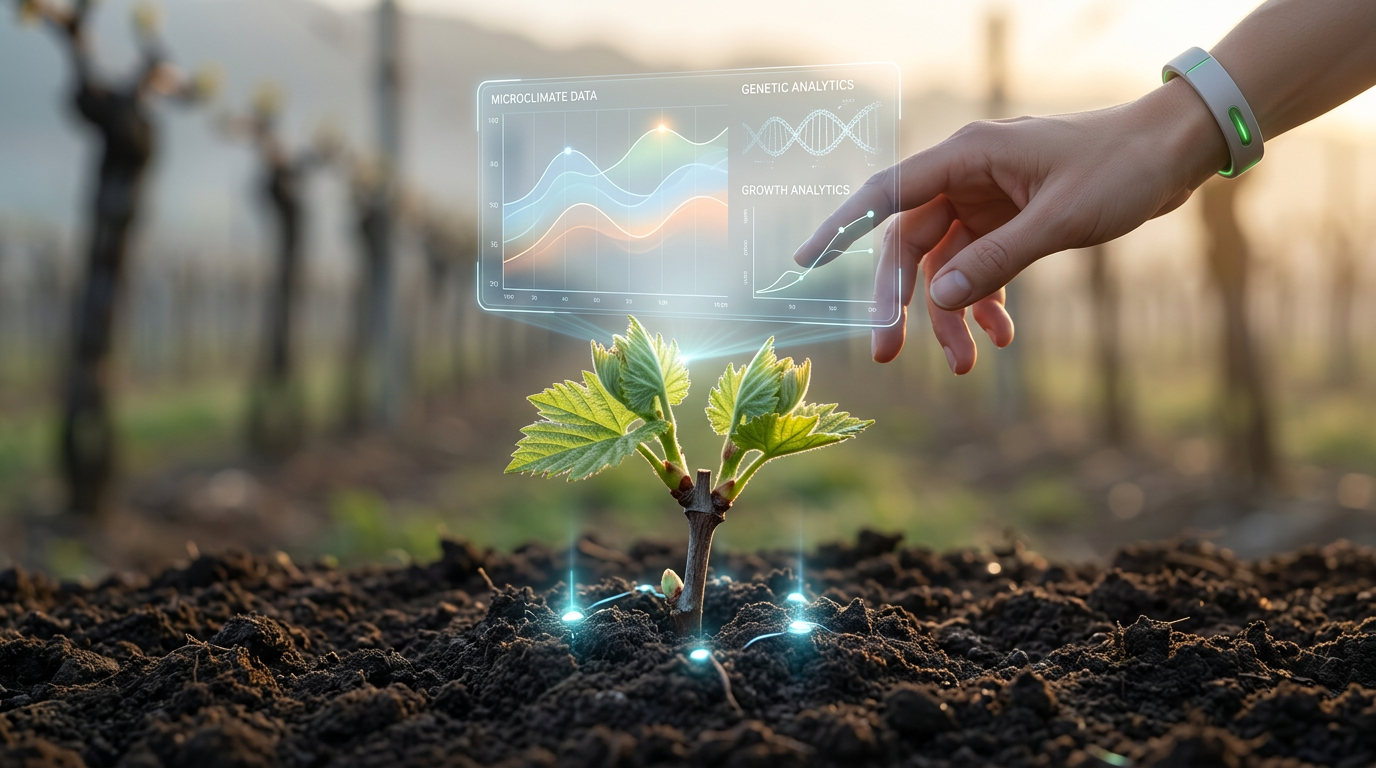
Recent advances in spectroscopy and plant physiology are providing new avenues for investigation. Scientists are exploring whether subtle electromagnetic shifts or gravitational forces from space could induce stress responses or enhance metabolic pathways in grapevines. This research is often conducted in controlled environments, making it possible to isolate and analyze specific variables.
Advanced Monitoring Technologies
- Precision Sensors: New generations of sensors can detect minute changes in soil moisture, plant sap pressure, and even subtle shifts in atmospheric ionization.
- Bioresonance Data: Some cutting-edge research involves bioresonance technology to assess the energetic state of vines, aiming to correlate these states with cosmic events.
- Satellite Imaging: High-resolution satellite imagery is being used to track large-scale vegetative patterns that might coincide with major cosmic phenomena.
The Role of Microbes
It's also speculated that cosmic influences might not directly affect the vine, but rather the microbial life within the soil and on the grape skins. These microorganisms are vital for nutrient cycling and fermentation, and any changes in their activity due to cosmic energy could indirectly impact the final wine profile. Understanding this complex interplay is a key focus for microbiologists in 2026. For more on how microscopic elements define wine, see discussions on The Art of the 'Vinous Micro-Biome': Crafting Terroir Through Engineered Yeast and Bacterial Cultures in 2026.
Case Studies and Anecdotal Evidence for Cosmic Terroir Wine
While empirical data is still being compiled, the world of wine is rich with anecdotal evidence and winemaking traditions that implicitly acknowledge cosmic influences. Many winemakers who adhere to biodynamic principles report noticeable differences in wine quality, aroma, and mouthfeel based on the specific calendar days of bottling, racking, and even tasting. This practical application of cosmic rhythms provides a compelling, if not yet fully explained, argument for the existence of cosmic terroir wine.
For example, some vintners meticulously avoid bottling on "root days" and prefer "fruit days" according to the biodynamic calendar, believing the latter enhances aromatic expression. These practices, passed down through generations, suggest a deep-seated intuition about the vine's connection to the larger cosmos. This traditional knowledge often intersects with modern scientific understanding, as explored by the Biodynamic Association.
Notable Biodynamic Estates
Several renowned wineries globally practice biodynamics, often citing improved vineyard health and more expressive wines as a result. These estates serve as living laboratories for observing the effects of celestial timing:
- Domaine de la Romanée-Conti (Burgundy, France)
- Château Pontet-Canet (Bordeaux, France)
- Felton Road (Central Otago, New Zealand)
- Benziger Family Winery (Sonoma County, USA)
Their continued success and reputation lend weight to the principles they employ, even as the scientific community works to fully elucidate the underlying mechanisms of cosmic terroir wine. Further insights into biodynamic farming can be found through resources like the Demeter Association, which certifies biodynamic farms and products.
The Future of Wine: Embracing the Vinous Nebula
As we look ahead, the exploration of cosmic terroir wine promises to redefine our understanding of viticulture and winemaking. It’s a journey that merges ancient wisdom with modern science, pushing the boundaries of what we consider "terroir." In 2026, the conversation is no longer about whether cosmic forces exist, but rather how they interact with terrestrial factors to shape the intricate character of wine.
For wine enthusiasts and professionals, this means a deeper appreciation for the complex ecosystem that creates each bottle. It encourages a holistic view of the vineyard, seeing it not just as a piece of land, but as a nexus of earthly and celestial energies. The "vinous nebula" is not just a poetic metaphor; it represents a frontier of knowledge that invites us to look up, as well as down, when contemplating the essence of wine. This expanded view of wine's origin adds another layer to its narrative, much like unraveling historical influences in aged wines through The Art of the Vinous Palimpsest: Unraveling Layers of History in Aged Wines for 2026.
Implications for Wine Education and Appreciation
The integration of cosmic influences into wine understanding could lead to:
- Enriched Tasting Experiences: Sommeliers and tasters might begin to consider cosmic conditions on the harvest date or bottling date when analyzing a wine.
- Innovative Winemaking Practices: New techniques might emerge that leverage precise cosmic timing to optimize various stages of wine production.
- Greater Sustainability: A deeper connection to natural rhythms often goes hand-in-hand with sustainable and regenerative agricultural practices, benefiting the environment.
Ultimately, the journey to understand cosmic terroir wine is an exciting one, inviting us to explore the profound connections between our planet, the universe, and the exquisite beverage we cherish. For more on the interconnectedness of wine and its environment, consider insights from the Sustainable Winegrowing Program.
Written by
Juniper Thorne is an experienced writer and educator with a deep passion for the world of wine. Bringing expertise in sensory analysis and wine culture to the Greatest Wine platform, Juniper helps readers explore and appreciate every nuance of wine.
Related Articles

The Cellar Architects: Mastering Elite Wine Preservation and Evolution in 2026
For the true connoisseur, wine is more than just a beverage; it's a living entity, an investment, and a passion. Mastering its preservation and evolution is an art form, especially in 2026 with new technologies and insights. Learn how to protect and enhance your cherished collection.
Juniper Thorne