The Art of the Winemaker's 'Happy Accident': Serendipity and Innovation in Crafting 2026's Exceptional Wines
In the intricate world of winemaking, where precision and tradition often dictate every step, there's a fascinating phenomenon known as the winemaker happy accident. This isn't about carelessness; it's about serendipity, a fortunate mistake or an unexpected turn of events that leads to an extraordinary discovery. As we look at the exceptional wines being crafted in 2026, understanding this interplay of chance and skill is more important than ever.

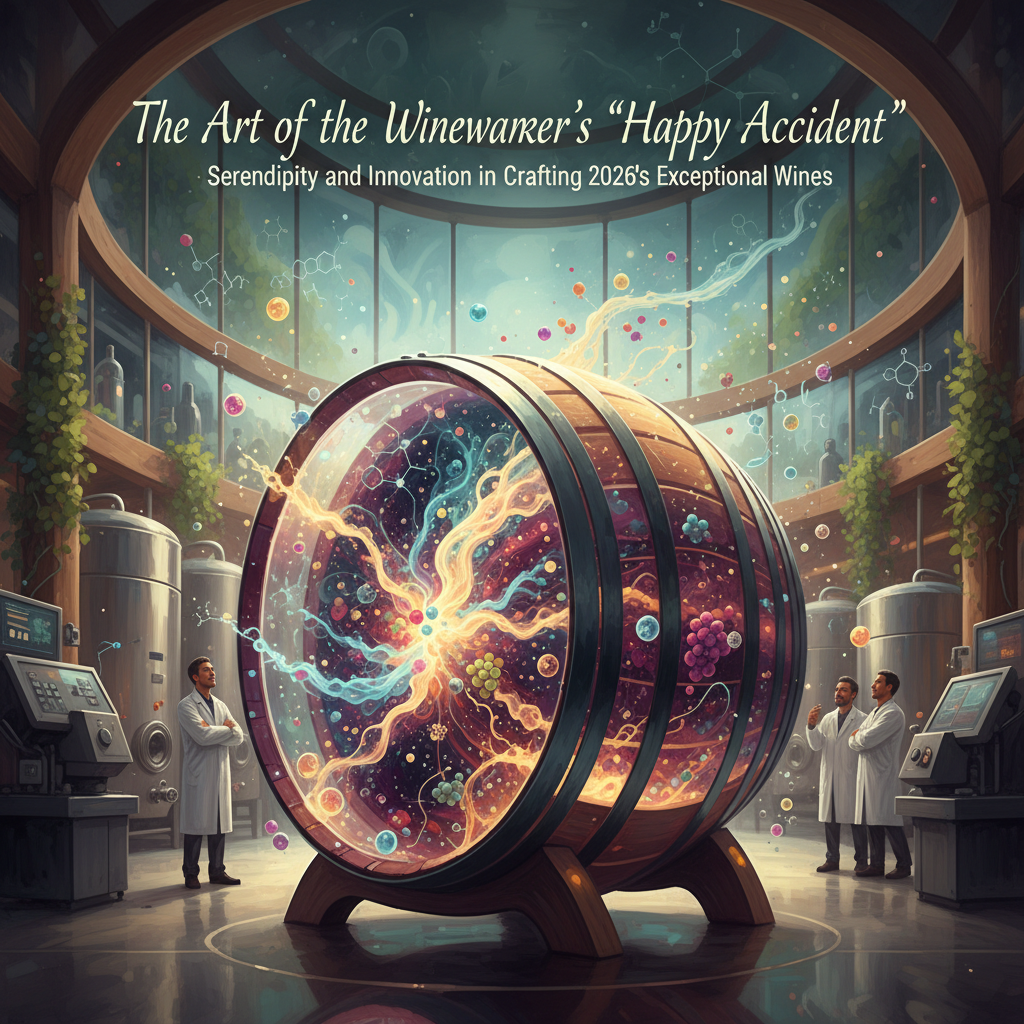
The Art of the Winemaker's 'Happy Accident': Serendipity and Innovation in Crafting 2026's Exceptional Wines
In the intricate world of winemaking, where precision and tradition often dictate every step, there's a fascinating phenomenon known as the winemaker happy accident. This isn't about carelessness; it's about serendipity, a fortunate mistake or an unexpected turn of events that leads to an extraordinary discovery. As we look at the exceptional wines being crafted in 2026, many of the most captivating stories involve these unplanned moments of brilliance that have shaped some of the world's most beloved varietals and styles. It's a testament to the fact that sometimes, the best innovations in winemaking emerge not from strict adherence to rules, but from embracing the unexpected.
The Genesis of a Winemaker Happy Accident: Embracing the Unexpected
The history of wine is replete with tales of accidental discoveries. Imagine a forgotten barrel, a specific fungal bloom, or an unusual fermentation temperature that, against all odds, yielded something truly remarkable. These moments, often initially viewed as potential disasters, have instead become pivotal turning points for countless wineries.
For a true winemaker happy accident to occur, it requires more than just a random event. It demands an observant and experienced palate, a willingness to deviate from the established norm, and the courage to pursue an unconventional path. Many winemakers today actively foster an environment where such exploration is encouraged, albeit under controlled conditions. For more insights into the thought processes behind these decisions, explore The Art of the Winemaker's Notebook: Unearthing the Craft, Philosophy, and Legacy of 2026's Visionaries.
Historical Glimpses of Serendipity
- Botrytis Cinerea (Noble Rot): Perhaps the most famous "happy accident," this fungus, which shrivels grapes and concentrates their sugars and flavors, was once feared. Now, it's essential for iconic sweet wines like Sauternes and Tokaji. For a deeper dive into how natural elements influence vintages, consider The Art of the Sommelier's Sixth Sense: Anticipating the Unseen Impact of Micro-Climates on 2026 Vintages.
- Sparkling Wine: While often attributed to Dom Pérignon, the initial "second fermentation" in bottles was likely a persistent problem in early winemaking, freezing grapes during winter and re-fermenting in spring. It wasn't always intentional but became a celebrated style.
- Vin Santo: The tradition of drying grapes, sometimes in less-than-ideal conditions, often led to oxidative styles that were adored. Some legends even speak of forgotten barrels delivering divine results.
Innovation Through Imperfection: Modern Winemaking and "Accidents"
While ancient history provides compelling examples, the concept of a winemaker happy accident is not confined to the past. In 2026, modern winemakers are increasingly exploring experimental techniques, sometimes deliberately creating conditions that might lead to unexpected outcomes. This could involve unconventional aging vessels, native yeast strains, or minimalist interventions that allow for a greater expression of the terroir, even if it introduces an element of unpredictability.
The current trend towards natural wines, for instance, often welcomes variations that industrial winemaking would filter out. These "imperfections" are frequently celebrated for adding complexity and uniqueness, embodying the spirit of a controlled winemaker happy accident.
Controlled Experimentation for Unforeseen Results
- Extended Maceration: Sometimes leaving grape skins in contact with the juice for longer than planned can extract unexpected tannins and color, leading to wines with greater depth.
- Amphora Aging: Reintroducing ancient aging methods like using clay amphorae can impart different textural qualities and allow for unique micro-oxygenation, occasionally leading to surprising flavor profiles.
- Wild Fermentation: Allowing natural yeasts from the vineyard to initiate fermentation can result in a more complex aromatic and flavor spectrum, though it requires careful monitoring as it's less predictable than cultured yeasts.
The Role of Sensory Analysis in Identifying a Winemaker Happy Accident
Discovering a winemaker happy accident isn't just about something unusual happening; it's crucially about recognizing its potential. This is where advanced sensory analysis and an expert palate become indispensable. A winemaker must be able to discern between an actual fault and an unexpected characteristic that enhances the wine's quality.
Great winemakers possess an acute ability to taste beyond the initial shock of the unfamiliar. They can identify the underlying structure, the developing aromas, and the mouthfeel that indicate a genuinely unique and desirable outcome, rather than simply a flaw. This judgment is often honed over years of experience and a deep understanding of wine chemistry and viticulture. To delve deeper into the science behind tastes and perception, consult resources like the Wine & Spirit Education Trust (WSET).
Developing the Palate for Accidental Brilliance
To truly appreciate the nuances of a winemaker happy accident, one must develop a refined palate. This involves:
- Expanding Your Wine Vocabulary: Understanding a wide range of aromas and flavors to accurately describe what you're experiencing.
- Blind Tasting Practice: Removing preconceptions about a wine's origin or varietal allows for objective evaluation. Learn more about refining your tasting skills in The Art of Blind Tasting: Unlocking Your Palate's Full Potential in 2026.
- Understanding Wine Faults: Knowing what constitutes a flaw helps differentiate it from an unusual but pleasant characteristic. The Wine Folly guide to wine faults provides excellent introductory information.
- Focusing on Balance and Complexity: Even an accidental characteristic should contribute to the wine's overall harmony and interest.
Stories of 2026: Celebrating the Recent Winemaker Happy Accident
In 2026, the wine world continues to buzz with stories of fortunate missteps. While specific recent examples might remain proprietary knowledge for a time, the spirit of the winemaker happy accident thrives. We are seeing more winemakers confidently releasing limited-edition bottlings that showcase unusual processing or aging techniques, explicitly describing them as outcomes of "experimental batches" or "unexpected developments."
For instance, one notable trend in 2026 involves some smaller wineries in emerging regions deliberately experimenting with partial whole-cluster fermentation in varietals traditionally destemmed. While challenging, some have reported incredibly aromatic and structurally unique wines that were entirely unforeseen, essentially a controlled winemaker happy accident that paid off handsomely, creating new market niches and exciting propositions for wine enthusiasts. Discover more about how various factors redefine wines in The Elusive Art of the Perfect Vintage: Deconstructing Ideal Climates and Vintner Decisions in 2026.
Beyond the Bottle: The Cultural Impact of the Winemaker Happy Accident
The allure of the winemaker happy accident extends beyond the quality of the wine itself; it weaves into the rich tapestry of wine culture. These stories of discovery and adaptation add a romantic, almost mythical layer to winemaking, reminding us that nature, even when seemingly rebellious, can be a collaborator in creating art.
These narratives resonate deeply with consumers who appreciate authenticity and a touch of the unpredictable. It fosters a sense of wonder and encourages a more open-minded approach to wine tasting, moving away from rigid expectations and towards an appreciation for unique expressions. In 2026, celebrating these accidents is also about celebrating the resilience, creativity, and passion of the winemakers who turn potential mishaps into masterpieces. For more on how culture influences wine, check out this academic perspective on wine culture.
Enjoying the Unexpected: A True Wine Lover's Perspective
For wine enthusiasts, seeking out wines that emanate from a winemaker happy accident offers a thrilling adventure. It's an opportunity to experience something truly unique, a wine that might never be replicated precisely again. This pursuit encourages:
- Curiosity: A desire to try new and unconventional styles.
- Open-mindedness: The willingness to appreciate flavors and textures that deviate from the norm.
- Intellectual Engagement: Learning the story behind the wine enhances the tasting experience.
- Appreciation for Craft: Recognizing the skill required to identify and harness accidental potential.
Ultimately, the winemaker happy accident is a powerful metaphor for innovation in a field deeply rooted in tradition. It reminds us that sometimes, the greatest discoveries lie just beyond the edge of our expectations, waiting to be unveiled by a keen eye and an adventurous spirit.
Written by
Juniper Thorne is an experienced writer and educator with a deep passion for the world of wine. Bringing expertise in sensory analysis and wine culture to the Greatest Wine platform, Juniper helps readers explore and appreciate every nuance of wine.
Related Articles

The Cellar Architects: Mastering Elite Wine Preservation and Evolution in 2026
For the true connoisseur, wine is more than just a beverage; it's a living entity, an investment, and a passion. Mastering its preservation and evolution is an art form, especially in 2026 with new technologies and insights. Learn how to protect and enhance your cherished collection.
Juniper Thorne