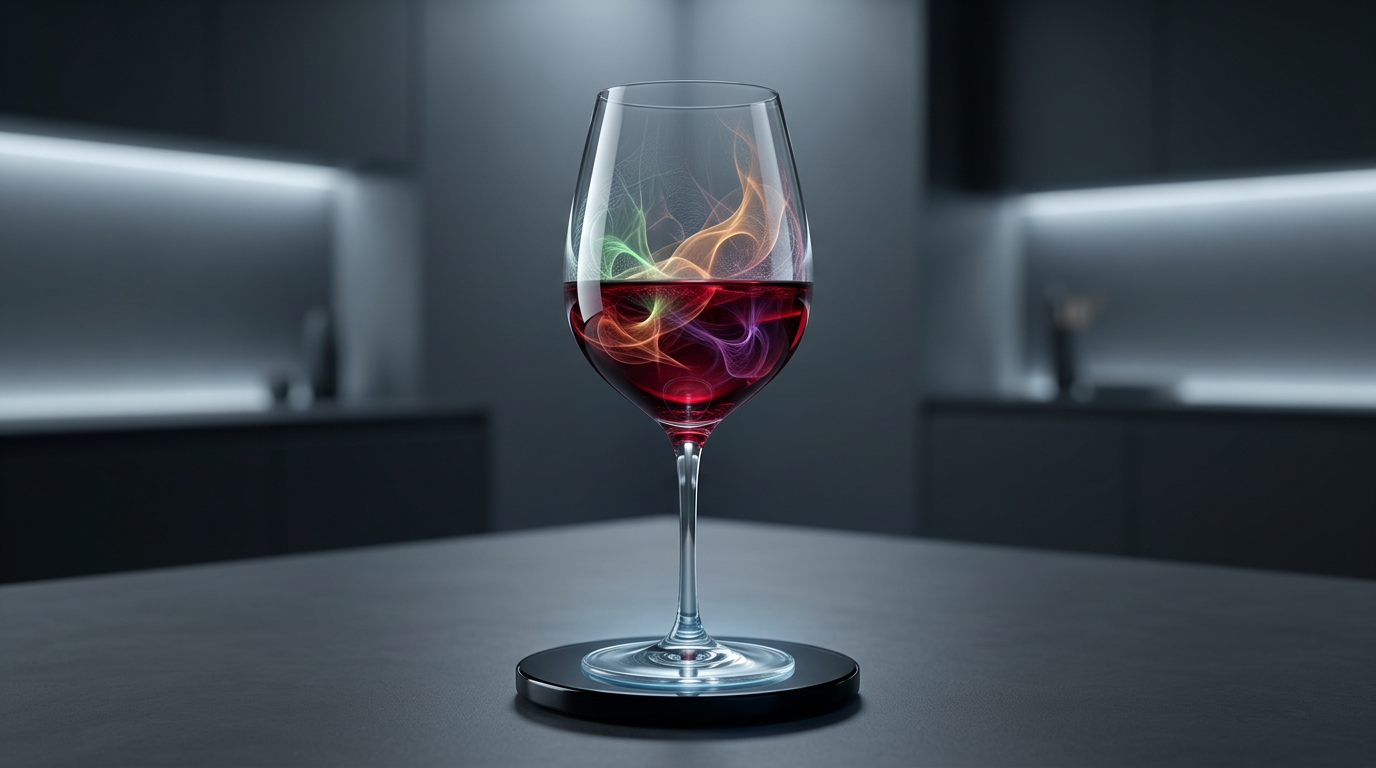
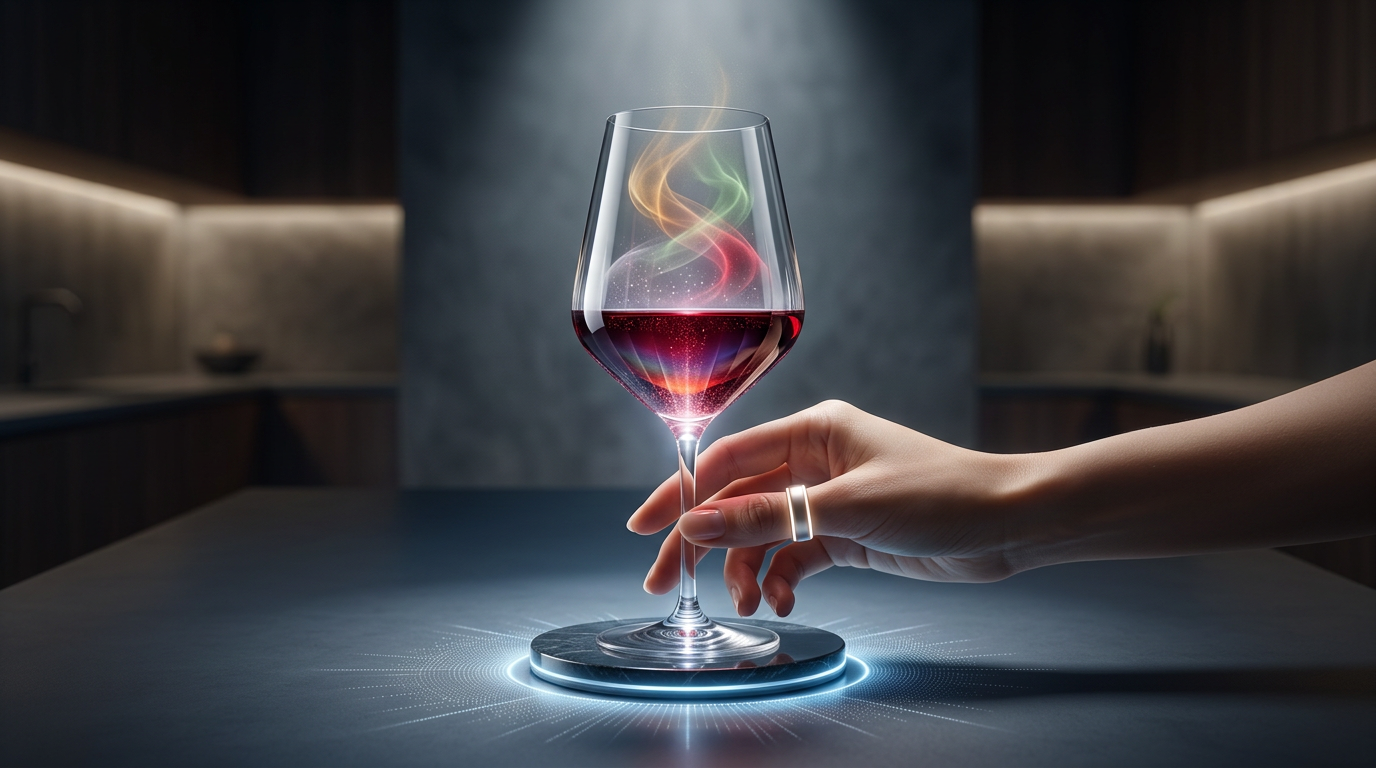
The Art of the 'Vinous Symphony': Deconstructing How Music and Sound Influence Wine Perception in 2026
In 2026, the fascinating field of sonic oenology continues to gain traction, revealing how auditory stimuli profoundly impact our perception of wine. This article deconstructs the 'Vinous Symphony,' exploring the art and science behind music and sound's influence on taste, aroma, and overall enjoyment, offering a new dimension to wine appreciation.

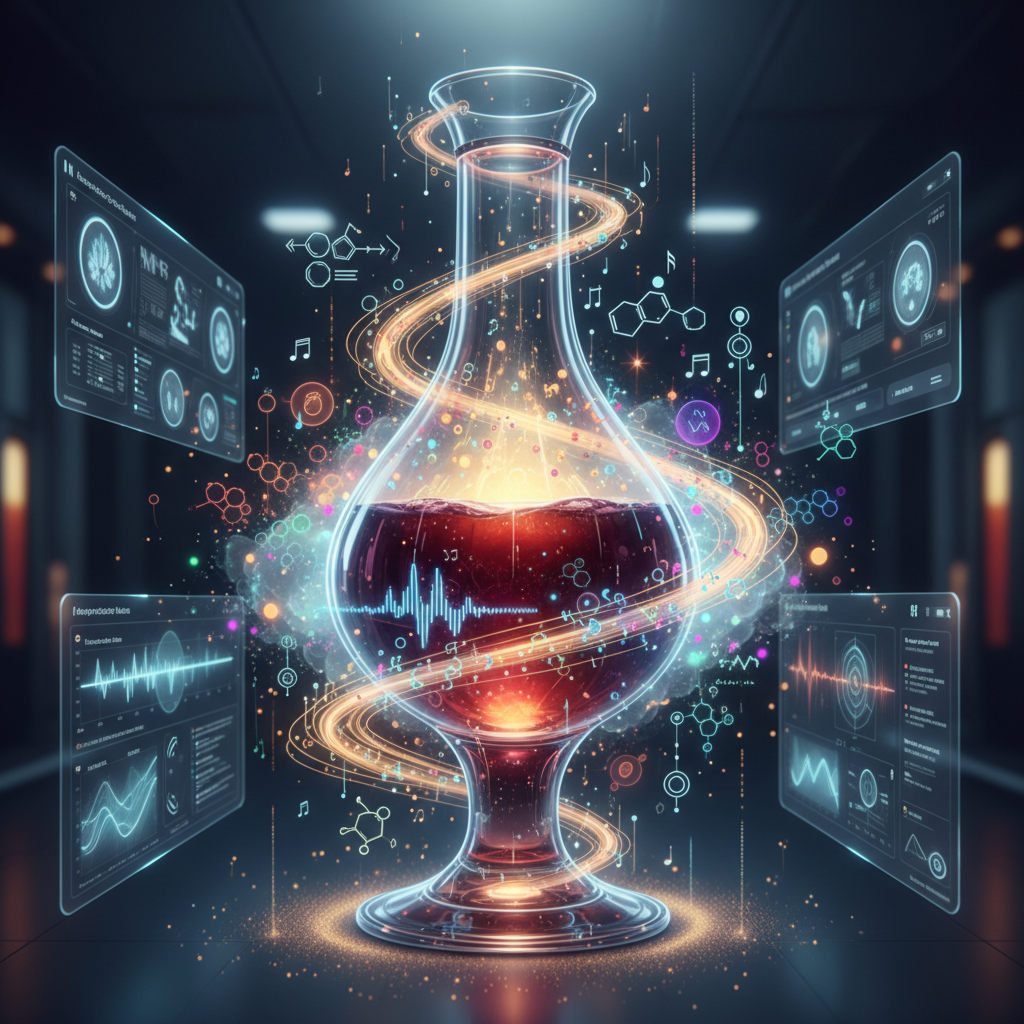
Sonic Oenology: How Sound Influences Wine Perception
In the evolving world of wine appreciation, understanding every subtlety that enhances the tasting experience is paramount. One fascinating and increasingly studied aspect is the impact of sound and music on our perception of wine, a field often referred to as sonic oenology. This innovative discipline explores how auditory stimuli can profoundly alter the perceived taste, aroma, and overall enjoyment of a vintage. As we move through 2026, the scientific community and forward-thinking sommeliers are delving deeper into this multi-sensory phenomenon, proving that a glass of wine is not just about what you see, smell, and taste, but also what you hear. For those interested in how other non-visual elements influence perception, consider exploring The Art of the 'Cognitive Cork': Deconstructing the Psychological Impact of Wine Packaging on Perception in 2026.
The Foundations of Sonic Oenology: How Sound Shapes Sensation
The concept that our senses are interconnected is not new, but its application to wine tasting, particularly through the lens of sound, has gained significant traction in recent years. Our brains are constantly integrating information from all sensory inputs, creating a holistic experience. When it comes to wine, the environment – including its acoustic elements – plays a crucial role.
Research indicates that specific frequencies, tempos, and musical genres can trigger emotional responses and cognitive associations that, in turn, influence how we interpret complex flavors and aromas. This intricate interplay makes sonic oenology a rich area of study for both neuroscientists and wine enthusiasts alike, much like understanding The Art of the 'Cognitive Blend': How Our Brains Harmonize Wine Flavors in 2026.
Early Research and Pioneering Studies in Sonic Oenology
Pioneering work in this cross-modal perception domain has shown that music can indeed prime our taste buds. For instance, studies published in the mid-2010s demonstrated that participants rated the same wine differently when exposed to contrasting musical excerpts. Robust low-frequency sounds might enhance the perception of richness or body, while high-pitched, delicate melodies could bring forth notes of acidity or fruitiness.
These initial findings laid the groundwork for the more sophisticated investigations we are witnessing in 2026, where technology allows for much finer control over auditory inputs and more precise measurement of sensory changes. The goal is to move beyond anecdotal evidence and establish empirical links between sound and wine perception, further solidifying the importance of sonic oenology.
The Psychology Behind Auditory Influence on Wine
The psychological mechanisms at play are complex. One key theory suggests that music acts as a semantic primer, subtly guiding our expectations and interpretations. For example, a piece of music described as "powerful" might make a red wine seem more robust, while "delicate" music could emphasize nuanced floral notes in a white wine. This cognitive bias is a potent force, influencing not just our conscious perceptions but also our subliminal responses.
Furthermore, emotional congruence plays a significant role. If the music evokes a feeling of joy or sophistication, that feeling can transfer to the wine-drinking experience, enhancing overall enjoyment and perceived quality. This emotional connection is a cornerstone of effective sonic oenology applications, echoing principles seen in The Art of the 'Cognitive Vintage': Mastering the Psychology of Wine Expectation in 2026.
Deciphering the 'Vinous Symphony': Practical Applications of Sound in Wine Tasting
Beyond academic interest, the principles of sonic oenology are finding practical applications in various facets of the wine industry. From bespoke tasting experiences to innovative marketing strategies, the understanding of how sound influences wine is transforming how we engage with it.
- Optimizing Tasting Environments: Wineries and high-end restaurants are increasingly curating specific playlists or ambient soundscapes for their tasting rooms and dining areas. The selection is not arbitrary; it's carefully chosen to complement the wine being served, aiming to accentuate desirable characteristics.
- Enhanced Wine Education: Sommelier training programs and wine courses are beginning to incorporate elements of sonic oenology, teaching aspiring professionals how to leverage sound to guide a taster's perception and highlight specific wine attributes.
- Marketing and Branding: Wine brands are exploring how specific musical accompaniments in advertising or promotional events can shape consumer perception and create a deeper emotional connection with their products. A brand aiming for a premium, luxurious image might use classical music, while a youthful, vibrant brand might opt for a modern, upbeat track.
The Role of Technology in Sonic Oenology 2026
In 2026, technological advancements are significantly pushing the boundaries of sonic oenology. Machine learning algorithms are now being trained to identify correlations between specific musical parameters (e.g., tone, rhythm, instrumentation) and perceived wine attributes (e.g., acidity, sweetness, body, tannin structure). This allows for data-driven recommendations on ideal sound pairings.
Furthermore, personalized listening experiences through directional audio and advanced acoustics in tasting rooms are becoming more common. Imagine a scenario where, based on your stated preferences, an AI curates a unique soundscape designed to perfectly complement the wine in your glass, creating an unparalleled, individualized tasting journey. This intersects beautifully with the concepts explored in The Art of the 'Palate Revolution': Designing Hyper-Personalized Wine Experiences with AI in 2026.
Current Trends and Future Directions in Sonic Oenology
The field of sonic oenology is dynamic, with new trends emerging constantly. One notable trend in 2026 is the growing interest in biophonic and geophonic soundscapes – the natural sounds of vineyards and their surrounding ecosystems. Some producers believe that exposing wine during its aging process to the ambient sounds of its origin terroir can subtly influence its character, a concept that marries traditional winemaking with cutting-edge sensory science. This concept aligns with the exploration of The Art of the 'Vinous Echo-Location': Mapping Wine's Unseen Sonic Terroir in 2026.
Another exciting development is the exploration of how haptic feedback, combined with auditory input, can further enhance wine perception. The vibrations from music, felt through a glass or tasting table, could potentially contribute to a richer, more embodied experience, adding another layer to the complex tapestry of sensory integration. This multi-modal approach promises to unlock even deeper insights into how we experience wine through sonic oenology.
A Case Study: The "Terroir of Sound" Experiment
A recent experiment conducted by a leading university in Bordeaux demonstrated the profound implications of this field. Researchers exposed batches of the same Cabernet Sauvignon to three distinct auditory environments during maturation: traditional cellar silence, classical music, and the recorded sounds of its specific vineyard terroir. Preliminary blind tastings in late 2025 and early 2026 indicated that wines matured with the "terroir of sound" were perceived by experts as having greater complexity, a more defined sense of origin, and a smoother finish.
While the exact mechanisms are still under investigation, these findings suggest that the subtle vibrations and frequencies inherent in a wine's birthplace might play an active role beyond just the soil and climate, hinting at a "terroir of sound" that could redefine our understanding of provenance. For more on scientific advancements influencing wine character, visit The Wine Institute's research on wine science.
Challenges and Criticisms in the Realm of Sonic Oenology
Despite the excitement surrounding sonic oenology, the field is not without its challenges and criticisms. Skeptics often point to the subjective nature of taste and musical preference, arguing that any perceived effects are largely psychological or placebo-driven. Ensuring scientific rigor and isolating variables in cross-modal studies remains a significant hurdle.
Furthermore, the commercialization of this concept raises questions about authenticity. Is playing a specific type of music truly enhancing the wine, or is it merely manipulating consumer perception for marketing purposes? This ethical consideration is an ongoing debate within the wine industry, particularly as more resources are poured into developing sophisticated sound-and-wine pairings. For insights into sensory perception research, the Monell Chemical Senses Center offers valuable resources.
However, proponents argue that as long as the experience is genuinely enhanced for the consumer, and the scientific backing is robust, the exploration of sonic oenology is a legitimate and valuable pursuit. The aim is to enrich, not deceive, the wine appreciation journey.
Conclusion: The Harmonious Future of Wine and Sound with Sonic Oenology
As we navigate 2026, the world of wine continues its remarkable journey of innovation and deeper understanding. Sonic oenology stands out as a vibrant testament to this evolution, pushing the boundaries of sensory perception and inviting us to experience wine in extraordinary new ways. From the quiet hum of a perfectly chosen background track in a tasting room to the cutting-edge integration of AI-driven soundscapes, the relationship between wine and sound is blossoming into a harmonious symphony.
Whether you're a seasoned connoisseur or a curious newcomer, paying attention to the acoustic environment as you savor your next glass might just unlock an entirely new dimension of flavor and enjoyment. The art of the 'Vinous Symphony' is truly becoming an integral part of the modern wine experience. For more on the intersection of senses and wine, explore studies on crossmodal correspondences in wine perception.
Written by
Juniper Thorne is an experienced writer and educator with a deep passion for the world of wine. Bringing expertise in sensory analysis and wine culture to the Greatest Wine platform, Juniper helps readers explore and appreciate every nuance of wine.
Related Articles
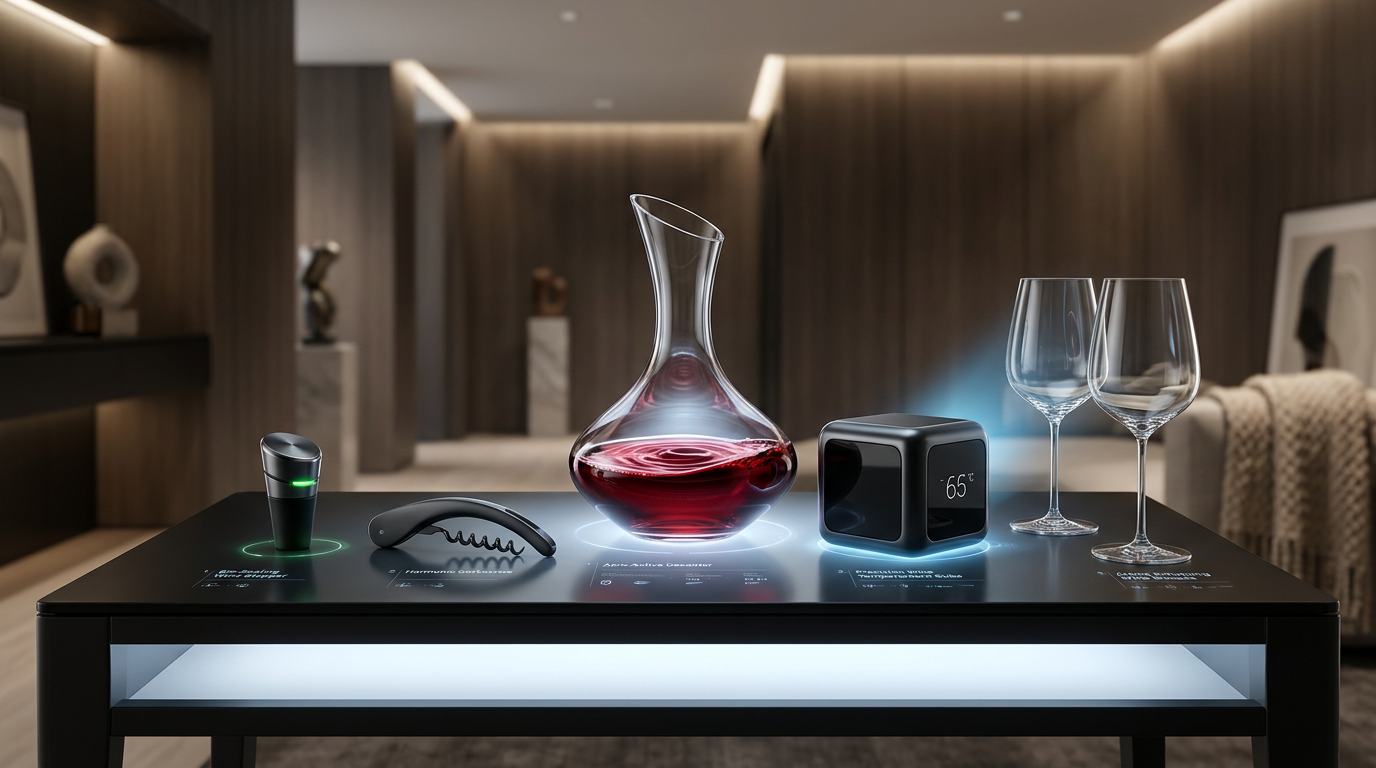
The Vinous Arsenal: Essential Tools for Elevating Your Wine Experience in 2026
As we navigate May 2026, the world of wine continues to evolve, offering enthusiasts unprecedented tools. Discover the essential wine accessories for 2026 that will elevate your enjoyment, from innovative aerators to smart preservation systems. Upgrade your vinous arsenal today with Greatest Wine.
Juniper Thorne