The Art of Wine in Zero Gravity: Crafting and Consuming Vintages in Space for 2026
It's 2026, and humanity's reach extends to crafting and consuming wine in space. This ambitious endeavor blends ancient winemaking art with cutting-edge aerospace technology, pushing the boundaries of what's possible. Discover the unique challenges and innovations shaping the future of 'space wine' and its impact on both terrestrial and extraterrestrial connoisseurs.

Space Wine 2026: Crafting & Enjoying Vintages in Zero Gravity
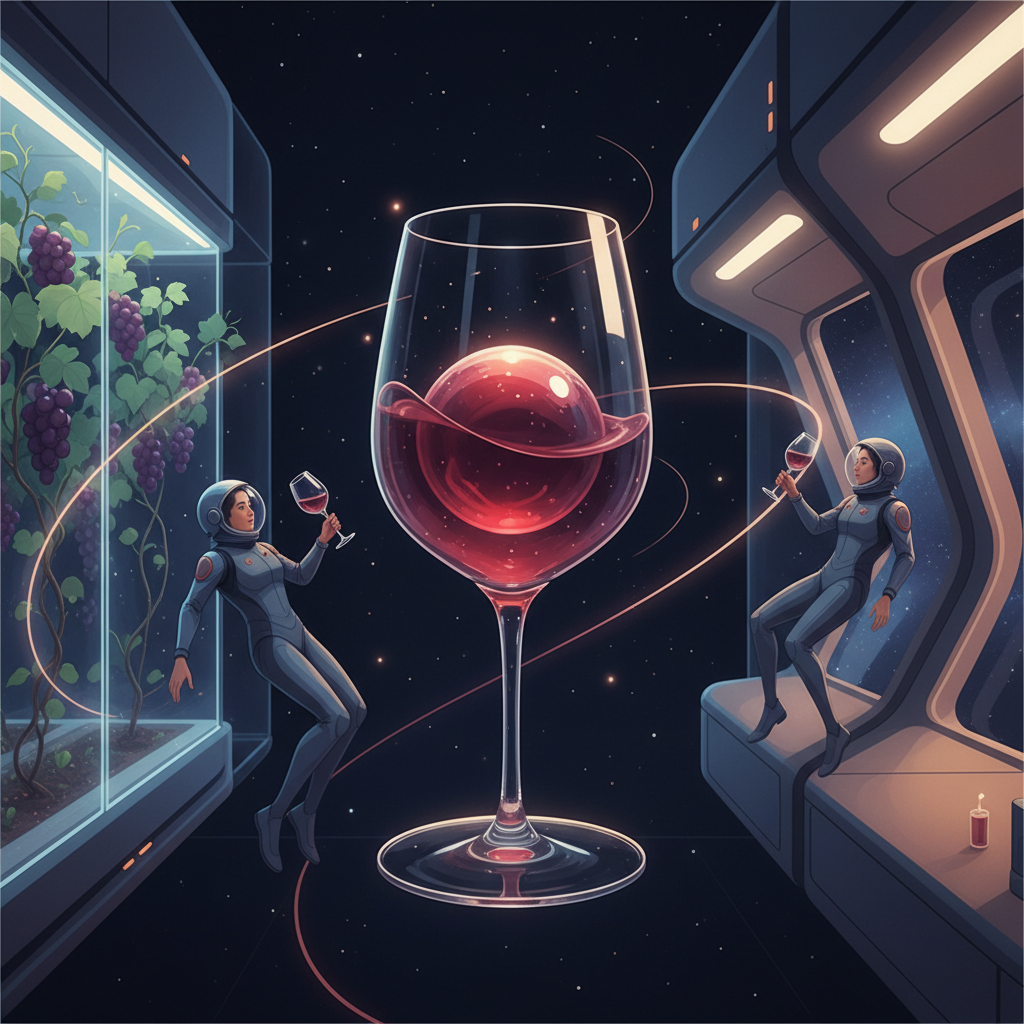
The year is 2026, and humanity's fascination with space exploration continues to reach new heights. Yet, the final frontier isn't just for astronauts and scientific experiments. Indeed, a new frontier is emerging: the creation and enjoyment of space wine 2026. This ambitious endeavor blends the ancient art of winemaking with cutting-edge aerospace technology, aiming to produce and appreciate vintages in an environment far removed from Earth's fertile vineyards. From understanding the unique challenges of vinification in microgravity to designing elegant vessels for consumption, the journey promises a genuinely out-of-this-world experience for wine enthusiasts. Clearly, this pioneering work is opening new avenues in cosmic luxury.
Crafting Space Wine 2026: Challenges and Innovations
Creating wine in space presents an array of unprecedented challenges. Primarily, the absence of gravity profoundly impacts every stage of the winemaking process. This includes everything from fermentation kinetics to the aging of the liquid. Researchers are currently exploring how yeast strains behave in microgravity and what specific adaptations are required to ensure a successful fermentation cycle. These studies contribute to The Art of the Winemaker's Palette, even in extreme environments.
Significantly, one primary concern revolves around fluid dynamics. On Earth, gravity helps stratify liquids and settle sediments. Conversely, in space, liquids behave differently, forming spheres and clinging to surfaces. This necessitates entirely new designs for fermentation tanks and storage containers to manage these unique conditions effectively for space wine 2026.
Microgravity's Impact on Fermentation
- Yeast Activity: How does microgravity affect yeast metabolism and byproduct formation? Initial experiments in 2026 suggest slower fermentation rates and altered aromatic profiles. This closely relates to our understanding of The Art of the Soil Microbe and its unseen influence on wine complexity.
- Mixing and Heat Transfer: Convection currents, crucial for even heat distribution and nutrient dispersion in Earth-bound fermentation, are absent in space. Therefore, new mechanical mixing systems or advanced thermal management techniques are being developed.
- Sedimentation Issues: Grape solids and yeast lees won't settle as they do on Earth. This requires innovative filtration and clarification methods for space wine 2026.
Aging and Storage Considerations for Space Wine 2026
Aging wine in space introduces another layer of complexity. Presently, the effects of microgravity and cosmic radiation on the wine's chemical composition and molecular structure are largely unknown. Scientists hypothesize that these factors could lead to distinct aging characteristics, potentially creating entirely new flavor profiles. Understanding these changes requires advancements in The Quantum Palate: Deconstructing the Science of Flavor Perception in Wine for 2026.
Accordingly, specialized, radiation-hardened containers are necessary to protect the wine during its journey and aging period. These containers also need to maintain precise temperature and humidity levels to prevent spoilage and ensure optimal maturation. The long-term stability of the wine in this environment remains a key research area for space wine 2026.
Designing for Zero-G Consumption: Enjoying Space Wine 2026
Once the space wine 2026 is successfully produced, the next hurdle is how to drink it. Understandably, the traditional wine glass is impractical in a zero-gravity environment. Spills would be catastrophic, and the sensory experience would be entirely lost. This calls for revolutionary designs for space-friendly wine consumption. This evolution is akin to The Glass Revolution: How Innovative Vessel Design is Redefining Wine Enjoyment in 2026 on Earth.
Innovative Glassware and Dispensers for Space Wine
Engineers and designers are developing enclosed, spill-proof sipping devices that allow for the controlled release of the wine. These "space wine glasses" might utilize surface tension, capillary action, or even small pumps to guide the liquid to the drinker's mouth.
- Capillary Action Designs: These designs leverage the natural tendency of liquids to flow in narrow spaces, allowing astronauts to sip the wine without it floating away.
- Sealed Cup Systems: Essentially, these are sophisticated sippy cups for adults – systems that prevent spills while still allowing aromatic compounds to reach the nose.
- Controlled Dispensing Mechanisms: Precision mechanisms deliver measured sips, ensuring a premium experience even without gravity's aid for space wine 2026.
Crucially, the aesthetic appeal of these new designs is also being considered. While functionality is paramount, the experience of drinking fine wine also involves visual pleasure. Designers aim to blend practicality with elegance, creating a ritual that remains sophisticated even off-world.
Sensory Experience and Palate Adaptation in Space
Astronauts frequently report altered senses of taste and smell in microgravity, often attributing it to fluid shifts that cause nasal congestion. This presents a unique challenge for appreciating the subtle nuances of space wine 2026.
To overcome this, winemakers might need to produce more aromatic and intensely flavored wines specifically tailored for off-world palates. Research into how specific flavor compounds are perceived in microgravity is ongoing, paving the way for bespoke space vintages in 2026.
The Future of Space Wine 2026 and Beyond
The vision for space wine 2026 extends beyond simple novelty. This pioneering work could lead to significant advancements in cryo-preservation, nutrient delivery systems for long-duration space missions, and even entirely new forms of agriculture in extreme environments. The data gathered from these experiments will inform future space habitats and self-sustaining off-world colonies.
Commercial Ventures and Space Tourism
As space tourism becomes more accessible in 2026 and beyond, the demand for unique luxury experiences will undoubtedly grow. Imagine sipping a glass of wine crafted entirely in orbit, a truly exclusive product that commands an extraordinary price. Several private companies are already exploring the commercial potential of space-aged or space-produced goods, including alcoholic beverages. For instance, Space Cargo Unlimited has actively pursued aging wine in space, providing valuable insights into space wine 2026.
For the ultra-wealthy, a trip into orbit to enjoy a glass of genuine space wine 2026 could become the ultimate status symbol. This blend of cutting-edge technology and ancient tradition could revolutionize the luxury market and open up new avenues for innovative product development.
Scientific and Agricultural Advancements from Space Wine
Beyond the glamour, the scientific insights derived from space winemaking are invaluable. Understanding plant growth, fermentation processes, and fluid behavior in microgravity provides critical knowledge for future endeavors, such as growing food on Mars or establishing self-contained ecosystems on lunar bases. The European Space Agency (ESA) also provides extensive research on this topic, which can be found on their official website.
- Sustainable Space Agriculture: Insights into viticulture in controlled, low-gravity environments could be transferred to other crops, making space-based food production more feasible.
- Biotechnology in Extreme Conditions: Studying yeast and bacterial behavior in space environments can lead to breakthroughs in biotechnology and pharmaceutical production.
- Fluid Management Solutions: Developing systems for handling liquids in space for wine can lead to more efficient water recycling and life support systems for astronauts.
Ethical and Regulatory Considerations for Space Wine 2026
As with all new frontiers, the advent of space wine 2026 raises important ethical and regulatory questions. Who owns the intellectual property of a wine made in international space? What are the safety protocols for consuming alcohol in space, given the delicate environment of spacecraft? International space law is still evolving, and new frameworks will be needed to address these novel scenarios.
Moreover, ensuring the integrity and safety of space-produced goods will be paramount. Strict guidelines regarding hygiene, quality control, and testing will be necessary to protect both consumers and the space environment. Furthermore, discussions around the environmental impact of launching winemaking equipment and products into space will be crucial.
International Cooperation and Standards for Space Wine
Given the global nature of space exploration, international cooperation will be essential in establishing standards for space-produced consumables. Agencies like NASA, ESA, and private companies will need to collaborate to define best practices and ensure safe, responsible development of this nascent industry.
The legal complexities surrounding intellectual property rights for inventions made in space or products manufactured off-world are still being ironed out. This will be a significant area of focus as companies look to commercialize products such as space wine 2026.
The Cultural Significance of Space Wine 2026
Wine has always been more than just a beverage; it's a symbol of culture, celebration, and human ingenuity. Taking this ancient art into space represents a profound cultural milestone. It signifies humanity's relentless drive to explore, innovate, and bring familiar comforts to unfamiliar territories. The first toast with a glass of truly extraterrestrial space wine 2026 will be a moment of historical significance, blending scientific achievement with an appreciation for life's finer pleasures. This journey is increasingly chronicled in The Art of the Sommelier's Journal.
Ultimately, the pursuit of space wine 2026 is a testament to the human spirit's desire to push boundaries, not just technologically, but experientially. It embodies the dream of integrating humanity's most cherished traditions with its greatest aspirations for the future, proving that even in the vacuum of space, there's always room for a good vintage. For a deeper dive into the technical and creative aspects of winemaking, consider exploring The Art of the Winemaker's Notebook.
Written by
Juniper Thorne is an experienced writer and educator with a deep passion for the world of wine. Bringing expertise in sensory analysis and wine culture to the Greatest Wine platform, Juniper helps readers explore and appreciate every nuance of wine.
Related Articles

The Cellar Architects: Mastering Elite Wine Preservation and Evolution in 2026
For the true connoisseur, wine is more than just a beverage; it's a living entity, an investment, and a passion. Mastering its preservation and evolution is an art form, especially in 2026 with new technologies and insights. Learn how to protect and enhance your cherished collection.
Juniper Thorne